Why PES Filter Cartridges Are Replacing Nylon
As filtration requirements become more demanding in biopharmaceutical manufacturing, food and beverage processing, and other high-purity liquid applications, membrane selection is receiving closer attention. PES Filter Cartridges are increasingly preferred over nylon in applications where low protein binding, reliable aqueous filtration, and controlled microbial retention are important. The change is not about making nylon obsolete. It reflects the need to match membrane characteristics more closely to the product being filtered, process conditions, and required filtration outcome.
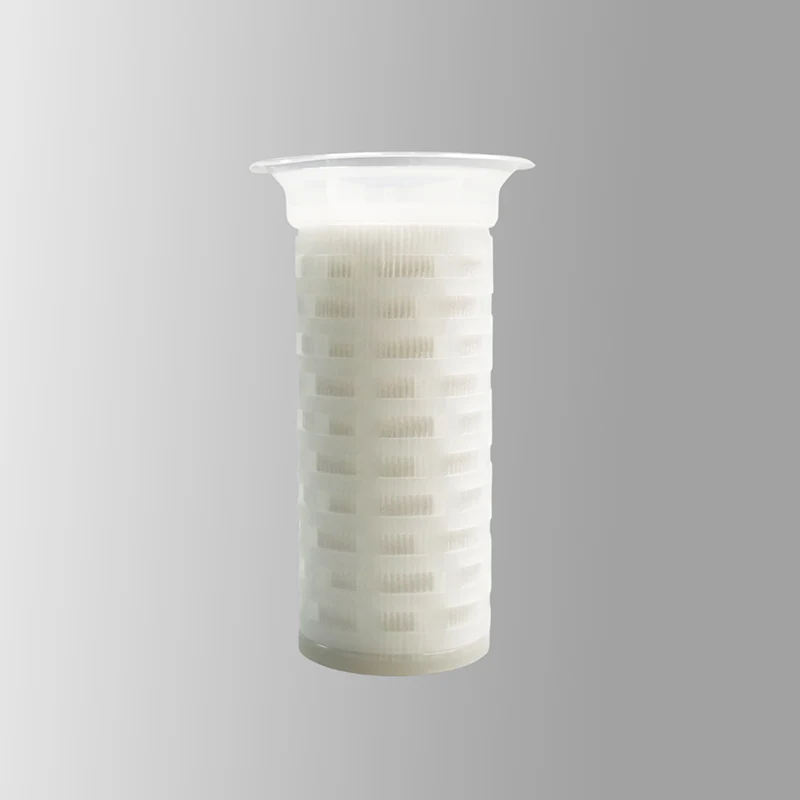
At Memsep Filtration And Solution Co., Ltd., we manufacture PES filter cartridges designed for applications that require effective liquid filtration and consistent product handling. Our cartridges use a single layer of hydrophilic polyethersulfone (PES) membrane with an all-polypropylene construction. Available pore sizes include 0.04 μm, 0.1 μm, 0.2 μm, 0.45 μm, and 0.65 μm, with multiple cartridge lengths available to accommodate different filtration systems.
Understanding why PES is selected over nylon requires more than comparing nominal pore sizes. Protein adsorption, membrane wetting, chemical compatibility, flow behavior, microbial retention, and process validation all influence the final decision.
Why PES Filter Cartridges Are Replacing Nylon in Many Applications
Lower Protein Binding for High-Value Products
One of the main reasons manufacturers consider PES membranes is their low protein-binding characteristics. In applications involving vaccines, biologics, and other valuable protein solutions, nonspecific adsorption to a filter membrane can affect product recovery and process economics.
PES is often preferred when maintaining protein recovery is a key requirement. Its hydrophilic membrane surface is well suited to aqueous solutions, while its low protein-binding properties can help reduce unwanted interaction between the membrane and sensitive product components. Actual recovery depends on the formulation, membrane grade, operating conditions, and system design, so application-specific testing remains important.
For manufacturers filtering high-value liquids, the relevant performance measure is not simply whether the membrane retains particles. It is also whether the filtration process achieves the required product quality without unacceptable product loss.
Hydrophilic Membrane Properties for Aqueous Filtration
PES is naturally hydrophilic, making it a practical option for many water-based filtration processes. Proper wetting is important because it influences how the liquid contacts the membrane and how consistently filtration can proceed.
When evaluating a PES filter cartridge, buyers should consider the liquid's composition, viscosity, temperature, operating pressure, and expected throughput. Flow performance cannot be determined from membrane material or nominal pore size alone. It should be assessed using application-relevant test data and the operating limits specified for the selected cartridge.
Broad Chemical Compatibility Within Defined Operating Limits
PES membranes offer broad chemical compatibility, which makes them suitable for a range of aqueous products and process liquids. However, chemical resistance must always be assessed against the actual formulation, concentration, temperature, exposure time, and cartridge construction.
The membrane is only one part of the filter cartridge. Housing components, support layers, end caps, seals, and other wetted materials can also affect compatibility. Memsep's PES cartridges feature an all-polypropylene construction, but the complete cartridge assembly should still be reviewed against the intended process conditions before use.
Controlled Filtration for Microbial Retention and Sterilizing Applications
PES membrane cartridges are used in applications where reducing microbial contamination or achieving a defined level of microbial retention is important. Depending on the validated cartridge grade and filtration process, they may be selected for suitable applications involving pharmaceutical solutions, biological products, and beverages.
Nominal pore size alone does not establish that a cartridge can sterilize a product. For sterilizing filtration, buyers should verify organism-retention validation, integrity-testing requirements, process conditions, and product-specific documentation. The appropriate cartridge must be selected according to the required filtration outcome rather than pore size alone.
PES vs. Nylon Filter Cartridges: Key Differences
PES and nylon serve different filtration needs. PES is often a strong candidate for aqueous processes involving protein-sensitive products, while nylon can remain suitable for applications requiring its particular mechanical or chemical characteristics. The best choice depends on the liquid, process objective, and verified filter performance.
| Comparison Factor | PES Filter Cartridges | Nylon Filter Cartridges |
|---|---|---|
| Protein Binding | Low protein-binding characteristics make PES attractive for protein-sensitive formulations. | Protein interaction can be higher depending on the membrane grade and formulation; recovery should be evaluated through testing. |
| Water-Based Applications | Hydrophilic properties make PES well suited to many aqueous filtration processes. | Can also be used for aqueous filtration when the selected membrane grade and process requirements are compatible. |
| Chemical Compatibility | Offers broad compatibility for suitable process liquids, subject to defined operating limits. | May be preferable in some applications depending on solvent compatibility and the specific nylon grade. |
| Product Recovery | Often considered when minimizing nonspecific protein adsorption is important. | Should be evaluated against product adsorption, yield, and overall process requirements. |
| Typical Selection Priorities | Protein solutions, biologics, vaccines, and other suitable aqueous filtration applications. | Applications where the selected nylon membrane's compatibility and performance meet the process requirements. |
The practical difference is application-specific. A PES cartridge should not replace a nylon cartridge solely because PES has lower protein binding. Buyers should compare chemical compatibility, flow rate, pressure drop, retention performance, product recovery, and total operating cost under comparable test conditions.
How to Select the Right PES Filter Cartridge Pore Size
Memsep PES filter cartridges are available in nominal pore-size options of 0.04 μm, 0.1 μm, 0.2 μm, 0.45 μm, and 0.65 μm. Each option should be considered in relation to the target contaminant, required retention, upstream treatment, and downstream product specifications.
| Nominal Pore Size | Typical Selection Consideration | What to Verify |
|---|---|---|
| 0.04 μm | Very fine filtration requirements where the specified membrane rating is suitable. | Target retention, flow restriction, integrity requirements, and application-specific validation. |
| 0.1 μm | Fine filtration where the process requires a smaller nominal pore size than conventional clarification grades. | Required retention performance, product compatibility, and acceptable throughput. |
| 0.2 μm | Commonly evaluated for sterilizing-grade filtration of suitable liquids when a validated grade is available. | Validated microbial retention, integrity testing, operating conditions, and applicable process requirements. |
| 0.45 μm | Clarification or intermediate filtration when appropriate for the target particles and process. | Particle loading, required clarity, downstream protection, and filtration capacity. |
| 0.65 μm | Coarser filtration or upstream protection in a suitable staged filtration process. | Contaminant profile, loading capacity, and compatibility with downstream filtration stages. |
These are general selection considerations, not guaranteed performance claims for every cartridge. The actual filtration outcome depends on the membrane grade, system design, liquid properties, and validation data. For a sterilizing application, a nominal 0.2 μm rating alone is not sufficient evidence of sterilizing performance.
Cartridge Length and System Compatibility
In addition to pore size, cartridge length must match the housing and required filtration capacity. Memsep offers multiple lengths and can discuss other length requirements for suitable customized projects. Before placing an order, buyers should confirm the housing dimensions, connection type, seal material, operating pressure, temperature range, flow requirement, and installation arrangement.
Length and membrane area can influence throughput and service life, but the actual result depends on the fluid's viscosity, suspended solids, contaminant loading, and process conditions. Selecting the cartridge using only its external dimensions may overlook important operating requirements.
Applications of PES Filter Cartridges
Because of their hydrophilic membrane characteristics and low protein-binding properties, PES cartridges are used in several types of liquid filtration. The specific cartridge grade and pore size must be matched to the product and validated process.
| Industry or Application | Filtration Objective | Key Evaluation Points |
|---|---|---|
| Biopharmaceuticals and Biologics | Filter suitable aqueous products while managing protein adsorption and microbial retention requirements. | Protein recovery, product compatibility, microbial retention validation, and process integrity requirements. |
| Vaccine Processing | Support appropriate filtration steps for temperature-sensitive or valuable biological formulations. | Formulation compatibility, adsorption testing, recovery, and validated filtration performance. |
| Beer and Wine Filtration | Help achieve the required clarity or microbial reduction in a suitable process stage. | Product composition, taste and quality requirements, solids loading, and the desired filtration outcome. |
| Bottled Water and Soft Drinks | Support particulate control or microbial filtration where the selected membrane and process are suitable. | Water quality, product ingredients, microbial control objectives, and applicable hygiene requirements. |
| General Aqueous Process Liquids | Reduce specified particulate or microbial contaminants according to process needs. | Liquid chemistry, temperature, operating pressure, flow demand, and membrane compatibility. |
Not every PES cartridge is suitable for every product listed above. Food, beverage, pharmaceutical, and biological applications may have different hygiene, regulatory, extractables, and validation requirements. Buyers should select a cartridge supported by the relevant product documentation and application-specific testing.
How Memsep Supports PES Filter Cartridge Manufacturing
Memsep Filtration And Solution Co., Ltd. was established in Suzhou, China, in 2015. The company integrates research and development, processing, and sales, with products covering filter cartridges, filter membranes, filter accessories, nonwoven materials, stainless steel filtration equipment, pressure vessels, and water and wastewater treatment equipment.
Our factory is located in the Wujiang District Industrial Park in Suzhou, Jiangsu Province. As our business has developed, we have expanded our production and laboratory areas to support manufacturing and product evaluation. Our facilities include a controlled-hygiene production workshop, a dedicated testing room, separate internal and external packaging areas, and a product warehouse.
| Manufacturing Capability | Customer Benefit |
|---|---|
| Cartridge Manufacturing and Process Control | Supports repeatable production against confirmed product specifications and inspection requirements. |
| Dedicated Testing Facilities | Provides a defined environment for product testing and the collection of supporting performance data. |
| Controlled-Hygiene Production and Packaging Areas | Supports orderly handling, packaging, and storage practices for filtration products. |
| OEM and Customized Manufacturing | Supports customer-specific pore sizes, cartridge lengths, product configurations, and other agreed requirements. |
| Product Testing Data | Helps customers review documented product characteristics and assess suitability for their filtration processes. |
Memsep provides OEM services and customized cartridge configurations for customers with specific system requirements. Available pore sizes and cartridge lengths should be confirmed for each product configuration. We recommend agreeing on the required specifications, testing criteria, packaging format, and delivery schedule before production so that both parties work from the same technical requirements.
Our product documentation and test data are important parts of the selection process. For applications involving regulated products or sterilizing filtration, buyers should request the specific test reports, material declarations, compatibility information, and compliance documentation relevant to the intended use. Regulatory suitability should be confirmed for the actual product and target market rather than inferred from the membrane material alone.
Choosing Between PES, Nylon, and Other Filter Media
PES is a strong candidate when low protein binding and aqueous filtration performance are important, but it is not the only membrane material available. Selection should start with the liquid to be filtered and the required process result, then consider material compatibility, retention, flow, and verification requirements.
For applications that do not require the specific characteristics of PES, buyers may also evaluate PP Filter Cartridges or PTFE Filter Cartridges. Different filter media serve different chemical, temperature, wetting, and filtration needs, so substituting one material for another should always be based on an application review.
In practical terms, PES is increasingly chosen over nylon when its low protein-binding characteristics, hydrophilic nature, and verified filtration performance better match the process. The most reliable choice is the cartridge supported by suitable technical data, application testing, and compatibility with the complete filtration system.
Previous:What is a PES Filter Used For?