How Does a PES Filter Cartridge Deliver Superior Filtration Performance and Long-Term Value?
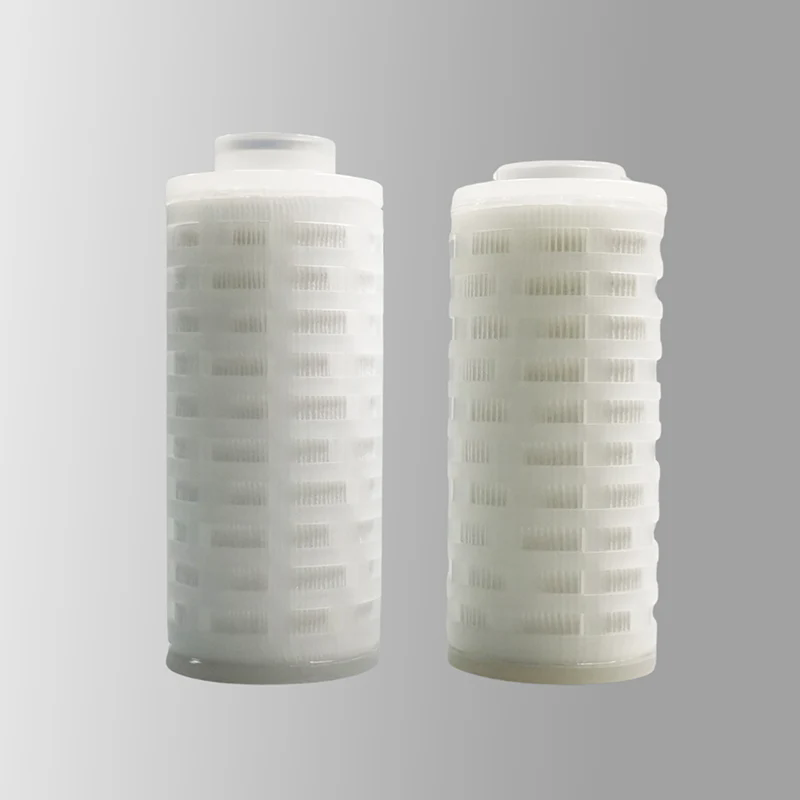
A PES (Polyethersulfone) Filter Cartridge is widely recognized as one of the most reliable membrane filtration solutions for applications requiring high purity, biological safety, and consistent fluid quality. Characterized by its asymmetric PES membrane structure, high porosity, strong chemical compatibility, and exceptionally low protein binding, this type of cartridge has become a preferred choice in biopharmaceuticals, food & beverage processing, laboratory analysis, microelectronics, and industrial water treatment.
How Do Key Parameters Define Performance in a PES Filter Cartridge?
A high-quality PES filter cartridge is engineered to address challenges such as microbial retention, fine particle removal, high flow efficiency, and long service life. These performance outcomes are driven by several structural and operational parameters—including pore size, membrane configuration, differential pressure limits, and filtration surface area.
How Do Technical Parameters Influence Filtration Efficiency?
The following table summarizes representative PES filter cartridge parameters commonly evaluated by engineers, system designers, and procurement teams:
| Parameter | Typical Specification | How It Influences Performance |
|---|---|---|
| Membrane Material | Polyethersulfone (PES) | Ensures low protein binding, fast flow, high microbial retention, and strong thermal/chemical resistance. |
| Pore Size Rating | 0.1 μm, 0.2 μm, 0.45 μm, 0.65 μm | Determines particle removal level; 0.2 μm typically used for sterilization-grade filtration. |
| Filtration Area | 0.6–1.0 m² per 10” cartridge | Larger area increases flow rate and extends service life. |
| Operating Temperature | Up to 90°C (continuous); 121°C–135°C for steam sterilization | Enables CIP/SIP processes and high-temperature sanitation. |
| Maximum Differential Pressure | 4.2 bar at 25°C | Ensures structural integrity during high-pressure operations. |
| Flow Rate | High permeability; varies by pore size | Reduces energy cost and enhances throughput. |
| End Cap Options | DOE, 222/226, Flat, Fin | Ensures compatibility with multiple filter housings. |
| Support/Drain Layers | PP outer cage, inner core reinforcement | Provides durability and prevents membrane deformation. |
| Typical Applications | Biologics, buffers, cell culture media, bottled water, electronics-grade liquids, fermentation | Defines where PES cartridges deliver their strongest value. |
These technical attributes collectively determine how effectively a PES filter cartridge performs in microbial removal, sterile filtration, and high-flow industrial purification processes.
How Does a PES Filter Cartridge Deliver Filtration Advantages?
How Does the Asymmetric PES Membrane Improve Filtration?
The asymmetric structure of a PES membrane features a dense surface layer supported by a gradually more porous sublayer. This gradient design allows the membrane to capture contaminants efficiently while maintaining fast liquid flow. The top layer performs final retention, while the supporting layer prevents early clogging—extending the service life significantly.
How Does Low Protein Binding Support Biological Applications?
PES membranes have naturally low protein absorption compared to nylon or PVDF alternatives. This characteristic preserves valuable biomolecules in processes involving:
-
Enzymes
-
Antibodies (mAbs)
-
Vaccines
-
Cell culture media
-
Fermentation broth
Low protein binding prevents sample loss, improves accuracy, and enhances production yield, making PES a preferred choice in pharmaceutical and laboratory filtration.
How Is Chemical and Thermal Stability Ensuring Long-Term Operation?
PES cartridges maintain structural integrity across various pH levels and withstand multiple sterilization cycles through steam, autoclave, or chemical sanitation. This durability minimizes replacements and supports demanding workflows in biotechnology and food processing plants.
How Does the Cartridge Design Reduce Operating Costs?
-
Larger filtration area increases throughput
-
High permeability reduces pump power requirements
-
Extended life cycle lowers replacement frequency
-
Steam and chemical compatibility reduces cleaning needs
These features contribute to better cost efficiency throughout the system’s operational life.
How PES Filter Cartridges Improve Industry Outcomes
Biopharmaceutical Production
In sterile drug manufacturing, PES cartridges are used for:
-
Final sterile filtration
-
Filtration of media, buffers, and process water
-
Protection of downstream sterile equipment
-
Removal of microorganisms before aseptic packaging
The membrane’s consistent pore integrity supports regulatory compliance and reduces contamination risk.
Food and Beverage Processing
PES cartridges are widely applied in:
-
Bottled water polishing
-
Beer and wine clarification
-
Dairy sterilization
-
Flavor and additive filtration
Their fast flow and reliable microbial retention increase production capacity without affecting product taste or structure.
Microelectronics and Semiconductor Manufacturing
Ultra-clean liquids are essential for wafer cleaning and etching. PES cartridges provide:
-
High-purity filtration with minimal extractables
-
Controlled particle retention
-
Stable performance in high-temperature chemical cycles
This stability supports precise manufacturing requirements.
Laboratory and Analytical Filtration
PES cartridges offer consistent lot-to-lot performance for analytical quality control and sample preparation, helping laboratories achieve reproducible results.
How Do Users Select and Maintain PES Filter Cartridges?
Q1: How to choose the correct pore size for a PES filter cartridge?
A: Selection depends on application goals. For sterile filtration in pharmaceutical production, 0.2 μm is typically required for removing bacteria and ensuring regulatory compliance. For clarification, 0.45 μm or 0.65 μm may be appropriate, depending on particle load. For electronics or high-purity water, 0.1 μm is often used to eliminate ultra-fine particles. The intended retention level, desired flow rate, and system pressure should guide final selection.
Q2: How to extend the life of a PES filter cartridge during continuous operation?
A: Extending service life involves optimizing pre-filtration stages, maintaining stable flow rates, and monitoring differential pressure to avoid sudden surges that can stress the membrane. Regular CIP (clean-in-place) or SIP (steam-in-place) routines help remove accumulated particles. Correct housing selection with proper sealing also prevents bypass, ensuring contaminants do not reach the membrane prematurely.
How Will PES Filter Cartridge Technology Evolve?
As industries adopt stricter purity standards and higher production rates, PES filter cartridges are expected to incorporate:
Higher-Flow Membrane Designs
Advancements in membrane porosity and asymmetry will reduce energy consumption and support faster filtration speeds.
Enhanced Anti-Fouling Surfaces
New surface-treated PES membranes will resist biofilm formation, allowing longer intervals between cleaning cycles.
Stronger Compatibility with Bioprocessing Automation
Future cartridges will integrate traceability features for automated systems, enabling real-time monitoring of flow rates, pressure data, and membrane health.
Sustainable Manufacturing Approaches
Environmental considerations will push producers toward recyclable cores and reduced-waste production processes.
Together, these trends signal a shift toward higher efficiency, lower downtime, and more sustainable filtration across all sectors.
How Does Memsep Provide Reliable PES Filter Cartridge Solutions?
High-performance PES filter cartridges are essential for industries requiring exceptional purity, consistent microbial retention, and cost-efficient operation. Their asymmetric membrane design, low protein binding capability, large filtration area, and strong chemical resistance position them as one of the most dependable filtration technologies for biopharmaceuticals, food processing, microelectronics, and laboratory workflows.
As global production standards continue to rise, demand for reliable filtration solutions will increase. Memsep provides PES filter cartridges engineered to meet strict international quality expectations, offering dependable retention performance, long service life, and compatibility with advanced purification systems. For technical consultation, product selection guidance, or bulk procurement support, contact us to explore how Memsep filtration solutions can enhance your operational performance.