Filtration Outcomes of PES Membranes in Pharmaceutical Manufacturing: More Reliable Sterility, Smoother Batches, and Better-Controlled Release
Filtration in pharmaceutical manufacturing is never just “running a liquid through a filter.” It directly affects three outcomes: sterility and safety, batch-to-batch consistency, and whether production can stay on schedule. On the shop floor, many problems are not caused by selecting the wrong pore size, but by chain reactions under real operating conditions—unstable flow, rapid differential-pressure spikes, frequent clogging, and variability that shows up in release testing—ultimately leading to downtime, rework, or even batch deviations.
PES (polyethersulfone) membranes are widely used in pharmaceutical and bioprocessing for a practical reason: across many aqueous systems (buffers, media, process water, compounding solutions, etc.), they often provide a strong balance between filtration efficiency and operational stability. For manufacturers, that stability typically translates into fewer deviations, higher line availability, and more predictable operating cost.
1. The core value of final filtration: lowering microbial risk and enabling more confident release
At critical steps—such as after compounding and before filling—filtration is typically intended to control microbial and particulate risks so the product can be released with confidence. When PES is used for final filtration, what operators often care about is not merely “can it retain,” but “can it retain consistently without dragging down throughput.”
When filtration is more stable, it often translates into practical benefits such as:
· Lower deviation risk: fewer deviations triggered by sudden ΔP increases, unexpected filtration-time overruns, or emergency filter change-outs.
· Better-controlled release timing: more predictable filtration makes sampling, testing, and release planning easier.
· Easier management of critical control points: if final filtration frequently “gets stuck,” teams resort to ad-hoc interventions; once stable, SOPs are far easier to standardize and execute.
2. Why faster filtration matters: it’s not minutes saved, it’s a full line no longer waiting
In pharma facilities, slow filtration is not just “slow”—it drives a chain of costs: longer tank occupancy, downstream filling waiting time, cleanroom resources tied up, and increased labor hours. In aqueous systems, PES often wets readily, starts smoothly, and supports favorable throughput, which can show up directly as:
· Shorter filtration cycle time: completing batch filtration faster reduces waiting and scheduling bottlenecks.
· Fewer high-ΔP stoppages: when ΔP rises more gradually, it’s easier to finish a batch as planned.
· Less repetitive work: fewer “surprises” mean fewer emergency disassemblies, less extra cleaning, and fewer repeat checks.
3. A little less clogging changes the economics: turning unplanned downtime into planned maintenance
The true cost of filtration is never just the filter media. Downtime, change-outs, disassembly and cleaning, deviation handling, additional testing, and batch delays are often the most expensive parts. In many applications, higher throughput performance with PES can lead to:
· Longer continuous run time: the same filter can process more volume before replacement.
· Fewer sudden blockages: when clogging trends are more predictable, teams can schedule change-out windows in advance.
· More consistent consumption and inventory planning: a more regular replacement cycle simplifies spare-part management.
It’s also important to be candid: if upstream particle loading is high, colloids are abundant, or variability is large, any final membrane can clog early. Rather than forcing the final membrane to “take the hit,” a more robust approach is to split the workload—use upstream clarification or prefiltration, and then use PES for fine/final filtration at the critical control point. This layered strategy often reduces total cost and improves stability.
4. Reducing product loss and variability: minimizing concerns about “losing actives” to the filter
In biopharma and certain high-value formulations, adsorption to filtration materials can create hidden losses—lower concentration, reduced potency, and greater batch variability. PES is often chosen for its comparatively lower-binding behavior in many systems (though outcomes still depend on surface treatment, formulation, and process conditions). From an outcomes perspective, this can mean:
· More stable yield: reduced variability in active loss caused by filtration.
· More consistent analytical results: fewer assay differences due to adsorption/desorption effects.
· Less “compensating overage”: less need to over-dose to offset expected losses.
5. Where PES “outcome advantages” are most visible
· High-volume aqueous fluids such as buffers and media: typical goals are “fast, stable, and less clogging.”
· Critical points from post-compounding to pre-filling: typical goals are “better risk control and more confident release.”
· Final polishing filtration for process water: typical goals are “stable water quality and downstream protection.”
6. Three implementation practices that tend to work better in real operations
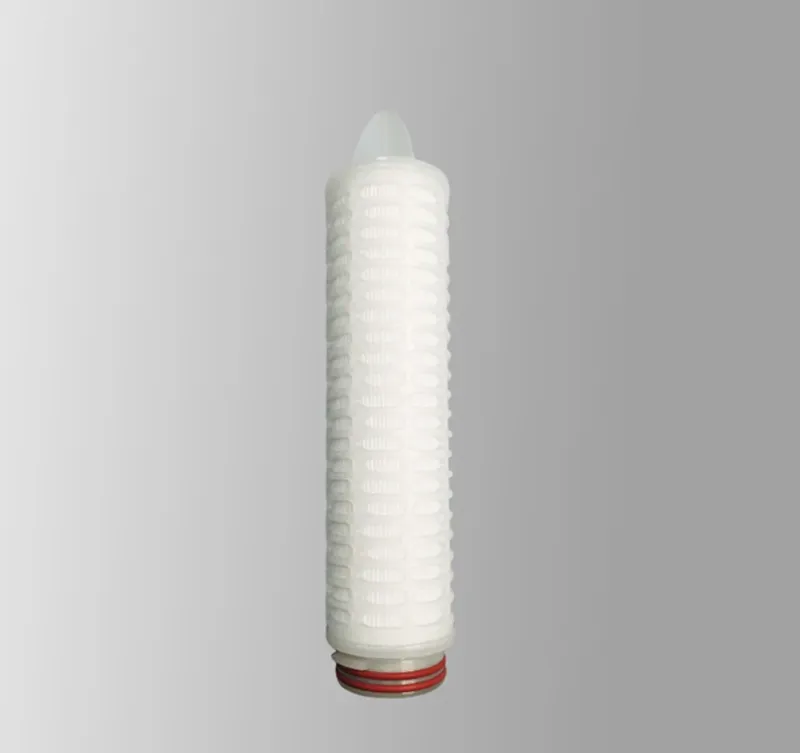
1. Use prefiltration to remove the heavy load first: the greater the variability in upstream particles/colloids, the more prefiltration should share the burden while final PES Cartridges the critical control point.
2. Pilot first, then scale: run the real formulation to observe throughput, clogging trends, and key quality attributes before locking the production configuration.
3. Standardize change-out strategy: define replacement rules by ΔP threshold, throughput, or run time to avoid reactive shutdowns when a filter suddenly plugs.