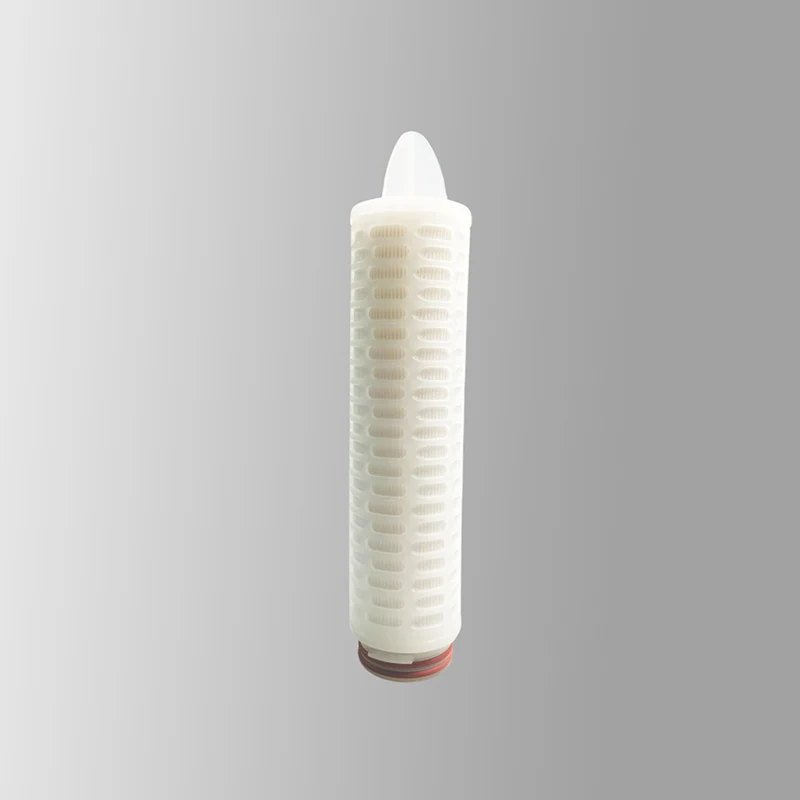
Practical Outcomes of PES Membranes in Juice and Dairy Filtration: Better Shelf-Life Appearance, Smoother Heat Treatment, and Less Rework
For products such as juice, dairy, and plant-based beverages, filtration is often caught between “it must be clean” and “don’t damage the taste.” What truly troubles the floor is often not “can it be filtered,” but that clarity fluctuates across batches under the same recipe, pressure drop across heat exchangers increases in the heat-treatment section, and emergency filter change-outs before filling stop the line—ultimately slowing both throughput and quality consistency.
When PES membranes are used for fine filtration / polishing filtration in these aqueous or high-water-content systems, the common goal is to turn filtration from “holding it together by experience” into “finishing a run by predictable rules.”
1. Improved appearance stability: less likely to haze back during shelf life
For beverages, “looking stable” is quality in itself. With appropriate PES fine filtration, common improvements are:
· Less milky haze and smaller batch-to-batch differences.
· Finished product is less likely to show fine sediment or flocs.
· Fewer rework events (recirculation for re-filtration, last-minute adjustments).
2. Protecting heat treatment and filling: fewer “passive foul-and-plug” issues in heat exchangers/valve sets
In many plants, the true bottleneck is not filtration itself, but that insufficient filtration makes downstream equipment harder and harder to run:
· Slower pressure-drop increase across heat exchangers: better stability in the heat-treatment section.
· Fewer failures of valves, nozzles, and flow meters: maintenance becomes more planable.
· Less emergency handling before filling: lower exposure and contamination risk.
3. Easier scheduling: turning filling from a “sticking point” into a “smooth point”
When filtration ΔP is more predictable, what the floor often gains is not “a little faster,” but “more on-time”:
· Smaller swings in filtration time: scheduling becomes easier.
· Change-out windows can be arranged in advance: fewer line stops.
· SOPs are easier to lock in: smaller shift-to-shift differences.
4. Implementation tips (closer to real food-plant practice)
1. Stage high-load bulk liquids first: use clarification/centrifugation/prefiltration to reduce the main load.
2. Run A/B line comparisons on the same batch: focus on “at what throughput does ΔP start to climb noticeably.”
3. Write change-out thresholds as executable numbers: for example, a upper limit + a minimum-flow dual condition.
Memsep is a professional Chinese manufacturer of PES filter cartridges, distinguished by advanced manufacturing technology and rigorous quality assurance. We invite you to contact us to learn more details and explore potential collaboration opportunities.